Delhi-Mumbai Expressway: India's Longest Highway Corridor
India's massive Delhi-Mumbai Expressway is one of the nation's most ambitious infrastructure projects, spanning 1,445 kilometres across six states. Connecting India's capital city to its financial hub, this 8-lane greenfield expressway is set to revolutionize road transport efficiency, travel time, and logistics operations. As of July 2026, the project is 64% complete with 929 km already operational, and most sections expected to be fully functional by June 2026. This comprehensive guide explores everything you need to know about the Delhi-Mumbai Expressway—from its current progress and toll rates to its impact on Indian infrastructure and economy.
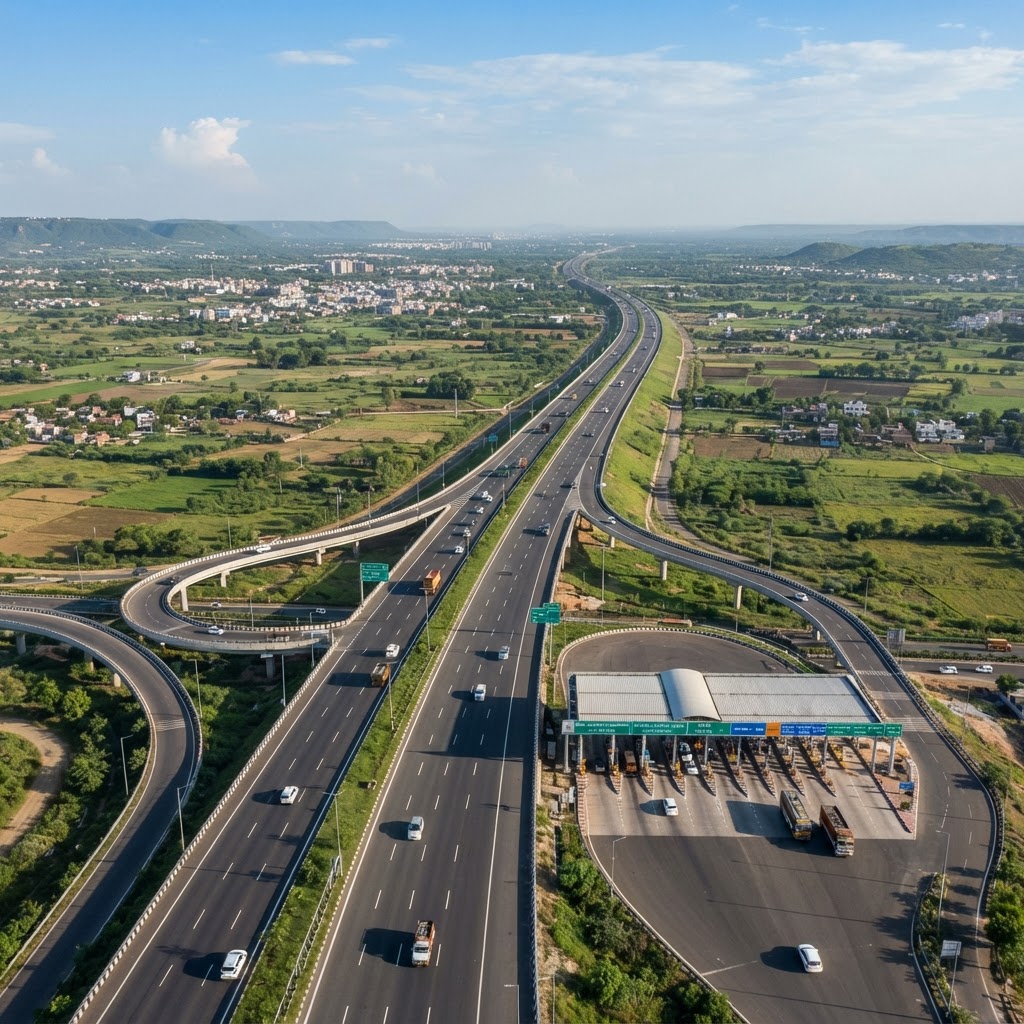
Table of Contents
- Project Overview & Current Status
- Route, Connectivity & States Covered
- Toll Rates & Fee Structure 2026
- Construction Timeline & Completion Updates
- Economic Impact & Benefits
- Delhi-Mumbai Expressway vs Other Major Highways
- Frequently Asked Questions
Project Overview & Current Status
The Delhi-Mumbai Expressway represents a significant step forward in India's road infrastructure modernisation. With a total project cost of approximately ₹98,000 crores (roughly USD 12 billion), this expressway is designed to reduce travel time between Delhi and Mumbai from 24 hours to just 12 hours. The project is divided into 12 packages across multiple states, each managed by different concessionaire companies under NHAI supervision.
Current Construction Progress
As of July 2026, the Delhi-Mumbai Expressway has achieved 64% physical completion across all packages. A total of 929 kilometres has already been operational, allowing travellers to access partial routes. The Haryana and Rajasthan sections are substantially complete, while the Gujarat packages (particularly packages 8, 9, and 10) face some delays and are now expected to finish by March 2028. The entire corridor will offer controlled-access, grade-separated highways with modern amenities and safety infrastructure.
Route, Connectivity & States Covered
The 1,445 km expressway traverses through six Indian states: Delhi, Haryana, Rajasthan, Madhya Pradesh, Gujarat, and Maharashtra. The route connects key economic centres and business hubs, facilitating seamless movement of goods and passengers. The expressway passes through or near several major cities including Dausa, Jaipur, Ajmer, Indore, Vadodara, and Surat before terminating in Mumbai's metropolitan region.
Highway Design Specifications
The expressway features an 8-lane carriageway design (expandable to 12 lanes in future) with state-of-the-art infrastructure. Each direction has 4 lanes of equal width, providing ample capacity for mixed traffic. The project includes modern toll plazas, rest areas, service stations, emergency lanes, and advanced traffic management systems to ensure safety and efficiency.
Toll Rates & Fee Structure 2026
The Delhi-Mumbai Expressway operates on a toll-based model to fund maintenance and operations. Toll rates are structured based on vehicle classification and distance travelled. According to 2026 rates, the toll structure is as follows:
| Vehicle Category | Rate per Km (FASTag) | Sample Toll (19.8 km) | Notes |
|---|---|---|---|
| Car/Jeep/Van | ₹2.19 | ~₹43-90 | Electronic payment required (FASTag) |
| Light Commercial Vehicle (LCV) | ₹3.50 | ~₹69-144 | Small trucks, vans |
| Bus / Heavy Truck (2-Axle) | ₹7.50 | ~₹148-250 | Commercial freight vehicles |
| Heavy Multi-Axle Vehicles | Variable | ₹300+ | Depends on axle configuration |
In 2026, NHAI implemented a 50% toll rate reduction for LCVs and buses during off-peak hours (9 PM to 6 AM) to encourage night-time freight movement. This incentive helps reduce congestion during peak hours and improves overall highway utilisation.
Construction Timeline & Completion Updates
The Delhi-Mumbai Expressway project began in June 2020 with an initial target completion date of March 2026. However, the project has experienced construction delays across certain packages, particularly in Gujarat. The current revised timeline is as follows:
| Section / Package | States | Length (km) | Status (July 2026) | Expected Completion |
|---|---|---|---|---|
| Packages 1-7 (Delhi to Vadodara) | Delhi, Haryana, Rajasthan, MP, Gujarat | ~1,100 | 90% Complete | June 2026 |
| Packages 8-10 (Vadodara to Mumbai) | Gujarat, Maharashtra | ~345 | 45-60% Complete | March 2028 |
| Overall Project | All States | 1,445 | 64% Complete | Early 2028 |
Economic Impact & Benefits
The Delhi-Mumbai Expressway is poised to deliver substantial economic benefits across India. By reducing travel time between the two major metro cities, the corridor will enhance national highways connectivity and commerce. The expressway will facilitate faster freight movement, lower logistics costs, and improved supply chain efficiency across India's manufacturing and trade sectors.
Logistics & Freight Benefits
For commercial operators, the Delhi-Mumbai Expressway offers significant advantages. Faster transit times reduce fuel consumption and vehicle operating costs. Studies estimate logistics costs could decline by 15-20% on this route compared to existing highways. The expressway enables cold chain logistics improvements, benefiting perishable goods transportation. Additionally, reduced travel time enhances driver safety by minimizing fatigue-related accidents on long-haul routes.
Regional Development Impact
Cities and towns along the corridor are expected to experience rapid economic growth. The expressway will open new markets for local businesses in Rajasthan, Madhya Pradesh, and Gujarat, while also improving accessibility to major industrial zones. Real estate values in proximity to expressway exits are already appreciating, reflecting investor confidence in the project's economic potential.
Delhi-Mumbai Expressway vs Other Major Indian Highways
| Highway/Expressway | Total Length | Travel Time (Delhi-Mumbai) | Lanes | Toll Status | Key Feature |
|---|---|---|---|---|---|
| Delhi-Mumbai Expressway | 1,445 km | 12 hours | 8 (expandable to 12) | Yes | Greenfield, access-controlled |
| NH-48 (Mumbai-Delhi via Indore) | 1,530 km | 18-20 hours | 4-6 lanes (mixed) | Yes | Existing route through cities |
| NH-27 (Alternative Route) | 1,600+ km | 22-24 hours | 2-4 lanes | Partial | Older, slower route |
| Mumbai-Ahmedabad Bullet Train | 508 km | 2 hours 45 min (planned) | N/A (Rail) | Planned | High-speed rail alternative |
Conclusion
The Delhi-Mumbai Expressway represents a transformational leap in India's road infrastructure, designed to connect two of the nation's most economically vital cities with unprecedented speed and efficiency. With 929 km already operational and most sections expected to be complete by mid-2026 (except Gujarat packages extending to 2028), this ₹98,000-crore project is redefining logistics, commerce, and travel in India. The expressway's modern design, toll infrastructure, and economic benefits position it as a cornerstone of India's broader infrastructure modernisation agenda. As Indian Railways continues modernising freight corridors, the Delhi-Mumbai Expressway complements these rail initiatives to create a comprehensive, multi-modal transport network for India's future.
You May Also Like: National Highways in India, Mumbai-Ahmedabad Bullet Train, and Bridges & Tunnels: India's Engineering Marvels
Frequently Asked Questions
What is the total length of the Delhi-Mumbai Expressway?
The Delhi-Mumbai Expressway spans 1,445 kilometres across six states: Delhi, Haryana, Rajasthan, Madhya Pradesh, Gujarat, and Maharashtra. It connects India's capital city to its financial hub via a modern, 8-lane controlled-access corridor.
How much time will the Delhi-Mumbai Expressway save compared to existing routes?
The expressway will reduce travel time from approximately 24 hours (on existing highways like NH-48) to just 12 hours. This 50% reduction in travel time offers significant benefits for passengers, freight operators, and the broader logistics industry.
What are the current toll rates on the Delhi-Mumbai Expressway?
As of 2026, toll rates are ₹2.19 per km for cars (FASTag), ₹3.50 per km for light commercial vehicles, and ₹7.50 per km for buses and heavy trucks. During off-peak hours (9 PM to 6 AM), LCVs and buses receive a 50% toll discount to encourage night-time freight movement.
When will the entire Delhi-Mumbai Expressway be completed?
Most packages (Packages 1-7) are expected to be complete by June 2026. However, Packages 8-10 in Gujarat face delays and are now targeted for completion by March 2028. The entire corridor is expected to be fully operational by early 2028.
Which states does the Delhi-Mumbai Expressway pass through?
The expressway passes through six states: Delhi, Haryana, Rajasthan, Madhya Pradesh, Gujarat, and Maharashtra. It connects major cities including Dausa, Jaipur, Indore, Vadodara, and Surat along its 1,445 km corridor.
What is the project cost of the Delhi-Mumbai Expressway?
The total project cost is approximately ₹98,000 crores (roughly USD 12 billion). The project is funded through a combination of central government allocation and toll-based recovery models overseen by NHAI (National Highways Authority of India).
How does the Delhi-Mumbai Expressway impact logistics and transportation?
The expressway enables significantly faster freight movement, reducing logistics costs by an estimated 15-20%. The reduced travel time minimises fuel consumption, enhances driver safety by reducing fatigue, and opens new opportunities for time-sensitive goods like perishables and high-value cargo.