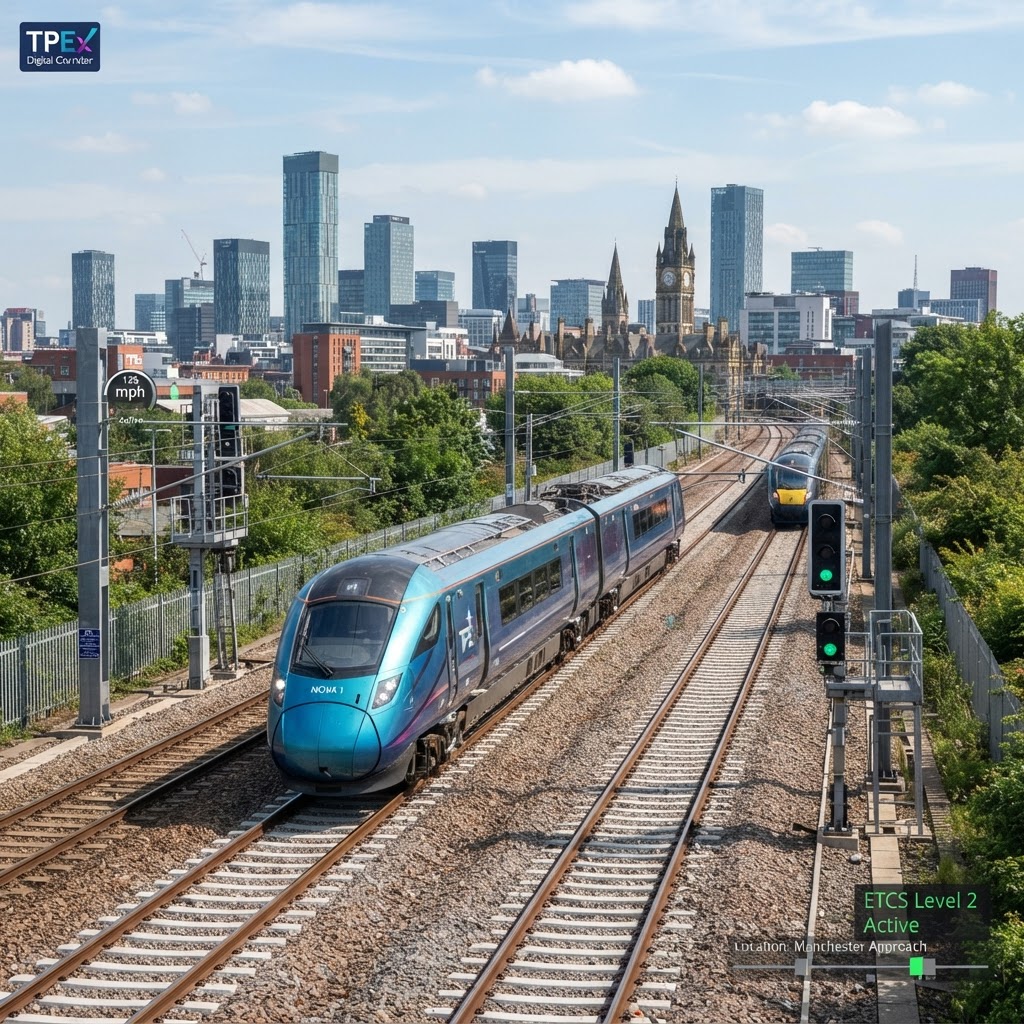
The TransPennine Route Upgrade (TRU) — a £3 billion ($3.75 billion USD) multi-year programme spanning 2019-2029 — represents one of the United Kingdom's most significant railway modernisation projects, fundamentally reshaping connectivity across the North of England. Stretching 45 miles (72 km) from Manchester through Huddersfield, Leeds, and York, this flagship scheme of the Office of Rail and Road (ORR) and Network Rail is designed to increase journey speeds, expand capacity by 20%, improve reliability, and establish digital signalling across the northern corridor.
Project Overview and Strategic Importance
The TransPennine Route Upgrade targets the Manchester-York corridor (via Leeds and Huddersfield), which carries over 40,000 passengers daily and serves as a critical artery connecting the North of England's largest cities: Manchester (550,000), Leeds (820,000), and York (210,000). The project's core objectives include: increasing train capacity by 20% through longer trains; reducing journey times by 10-15%; improving punctuality from 85% to 95%+; and eliminating traditional signal boxes in favour of modern digital railway operation centres.
Geographic Coverage and Key Segments
| Segment | Length (miles) | From | To | Key Stations |
|---|---|---|---|---|
| Manchester-Huddersfield | 16 | Manchester Piccadilly | Huddersfield | Stockport, Stalybridge, Mossley |
| Huddersfield-Leeds | 16 | Huddersfield | Leeds | Hebden Bridge, Mytholmroyd, Normanton |
| Leeds-York | 13 | Leeds | York | Crossflatts, Calverley, Garforth, Selby |
| TOTAL | 45 | Manchester | York | 22 Major and Minor Stations |
2026 Progress and Milestones
As of July 2026, the TransPennine Route Upgrade has achieved significant progress: Digital Signalling deployment of modern ETCS (European Train Control System) Level 2 across 60% of the route (complete on Manchester-Huddersfield segment); Track Upgrades with 90% of the route upgraded to permit line speeds of 125-160 km/h; Station Improvements at Huddersfield station fully upgraded (completed March 2026); New Rolling Stock with 19 new 9-car TransPennine Express Class 802 trains deployed (15 operational); Workforce with over 1,500 new jobs created.
Digital Signalling and Smart Railway Technology
The TRU's most groundbreaking innovation is deployment of European Train Control System (ETCS) Level 2 — a modern, automated signalling system that replaces 150-year-old lineside signals with digital, GPS-enabled train control. This system automatically optimises speed and spacing between trains, permits trains to operate at 160 km/h (100 mph) instead of 125 km/h, reduces energy consumption by 12%, enables remote operation from centralised control centres, and provides real-time passenger information.
Station Upgrades
| Station | Investment (£m) | Key Upgrades | Status (2026) |
|---|---|---|---|
| Huddersfield | 320 | New concourse, disabled access, 8 new platforms | ✅ Completed March 2026 |
| Leeds | 540 | Platform extensions, new entrance, step-free access | 🔧 40% complete, Q4 2026 |
| York | 180 | Accessibility upgrades, ticketing, WiFi | 🔧 In progress, Q2 2027 |
| Manchester Piccadilly | 400 | New eastern entrance, 13 additional platforms | 🔧 60% complete, Q1 2027 |
Economic Impact and Passenger Benefits
The TRU is projected to deliver £10.5+ billion in economic benefit to the North of England by 2050. Passenger benefits include: Faster journeys (Manchester to Leeds: 50→42 mins; Manchester to York: 80→68 mins); More capacity (20% increase, 15,000+ additional seats daily by 2027); Better reliability (95%+ on-time performance); Improved experience (WiFi, real-time info, modern seating); Mode shift (50,000+ additional rail passengers annually).
New Rolling Stock
The TRU includes deployment of 19 new Bombardier Class 802 trains, each with 9 cars (expandable to 10) and 600+ capacity. By July 2026, 15 are operational, providing 8 new daily services between Manchester and York. Features include: modern seating with legroom and plug sockets; free WiFi and USB charging; accessible toilets; real-time passenger info; energy-efficient traction motors (15% fuel cost reduction).
Phased Completion Timeline
July 2026: 60% complete; Manchester-Huddersfield fully operational
Q4 2026: Huddersfield-Leeds digital signalling deployment
Q2 2027: Full 45-mile corridor with digital signalling; all trains deployed
2029: Full project completion and Network Rail handover
Comparison with Other UK Rail Projects
| Project | Length | Cost (£b) | Status | Focus |
|---|---|---|---|---|
| TransPennine Route Upgrade | 45 miles | 3.0 | 60% (2026) | Northern speed & capacity |
| Great Western Railway Upgrade | 120 miles | 9.4 | 90% complete | Western electrification |
| Midland Main Line Upgrade | 98 miles | 2.8 | 30% complete | Central electrification |
| East Coast Main Line Upgrade | 154 miles | 5.1 | 70% complete | Eastern speed improvements |
You May Also Like: HS2 High-Speed Rail Project: UK's Modern Railway Revolution, 5G Connectivity on UK Trains: How Project Reach Is Transforming Mobile Networks, and Indian Railways in 2026: Vande Bharat and Modernisation.
Frequently Asked Questions
What is the TransPennine Route Upgrade exactly?
The TRU is a £3 billion modernisation programme upgrading the railway between Manchester and York (45 miles) through improved signalling, track upgrades, new trains, and station enhancements. It's one of the UK's flagship rail projects, running 2019-2029.
When will the TRU be complete?
The project is expected to be fully complete by 2029. Key milestones include digital signalling deployment by Q2 2027 and all station upgrades by Q1 2027.
How much faster will journeys be?
Journey times will reduce by approximately 8-12 minutes depending on the route. Manchester to Leeds will drop from 50 to 42 minutes; Manchester to York from 80 to 68 minutes.
What is ETCS Level 2 signalling?
ETCS Level 2 is a modern, GPS-enabled digital signalling system that replaces traditional lineside signals. It permits higher speeds (160 km/h vs. 125 km/h), improves reliability, and enables remote train operation.
How many new trains are being deployed?
19 new 9-car Bombardier Class 802 trains are being introduced, with 15 already operational as of July 2026. They provide 600+ seats per train and feature modern amenities like WiFi and USB charging.
Will passenger fares increase?
Network Rail and TransPennine Express have committed to freezing fares for the first 5 years post-completion (2027-2032) as part of the TRU benefits programme. Long-term pricing will be determined by the ORR.
How will the TRU benefit the North of England?
The TRU is projected to deliver £10.5+ billion in economic benefit by 2050 through improved connectivity, reduced business travel time, enhanced regional competitiveness, and an estimated 50,000 additional rail passengers per year.