Northern Powerhouse Rail is one of the UK’s most closely watched transport programmes because it promises to improve east-west connectivity across the North of England. Rather than being a single railway line, it is a portfolio of upgrades and new infrastructure involving Manchester, Leeds, Bradford, York, Sheffield, Liverpool and surrounding communities. In 2026, attention is focused on how the TransPennine Route Upgrade, station works, electrification and wider rail reform fit together, and whether the funding pipeline can turn long-standing promises into reliable services. The programme matters to passengers facing slow, crowded cross-Pennine journeys, but its case is also economic: better connections can widen labour markets, support city-centre development and make northern freight and business travel more competitive. This guide explains the routes, the engineering, the money, the passenger benefits, the risks and the indicators that will show whether Northern Powerhouse Rail is genuinely changing the North’s transport geography.
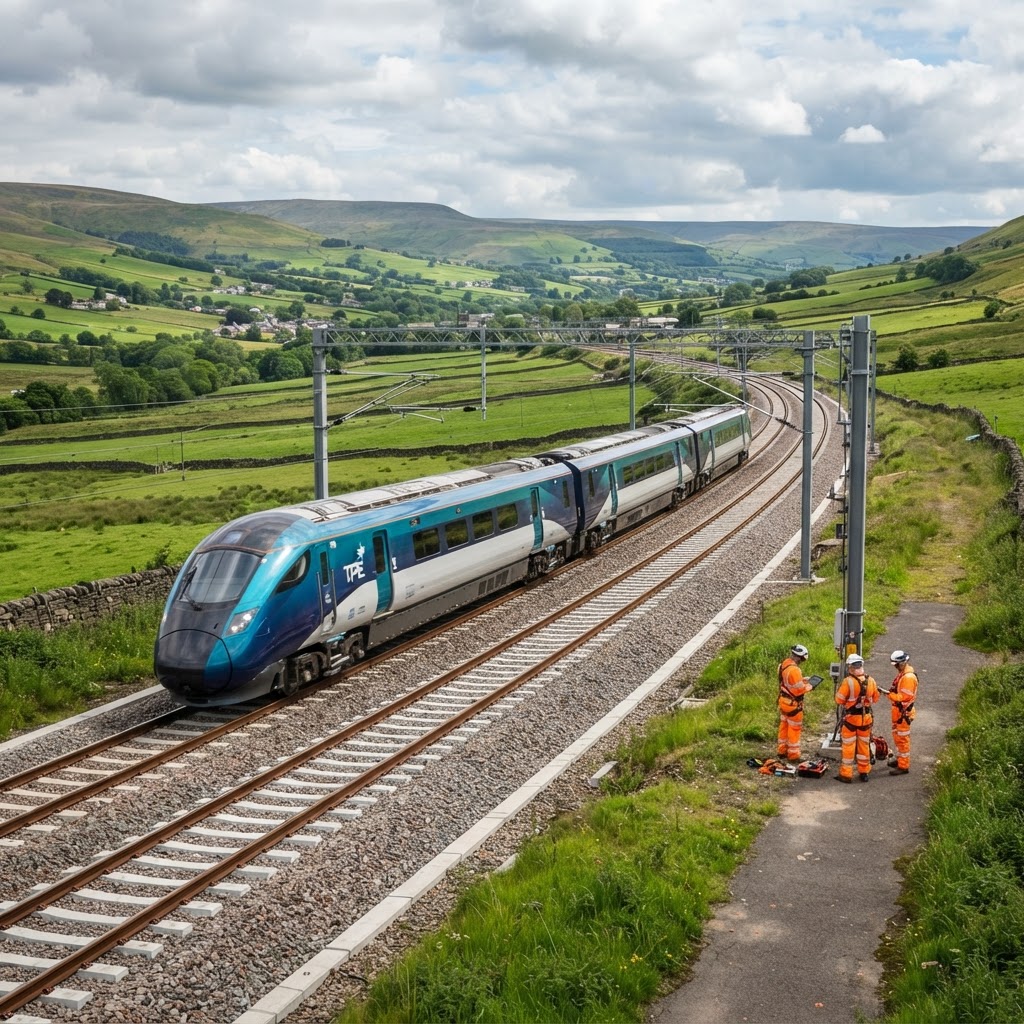
Table of Contents
- What the programme includes
- Routes and the Bradford connection
- Funding and value for money
- Electrification, stations and engineering
- Journey times, capacity and reliability
- Regional growth and environmental factors
- How to track progress
What Northern Powerhouse Rail includes
Northern Powerhouse Rail is often described as a high-speed railway, but that shorthand can create confusion. The programme is better understood as a network strategy: improve existing routes where upgrades deliver value, build new sections where a direct alignment is needed, modernise stations and create capacity for more frequent services. The exact scope, phasing and terminology have changed through successive reviews, which is why readers should distinguish between an aspiration, a funded intervention and a construction contract.
The TransPennine Route Upgrade is a central part of the story. It aims to improve the railway between Manchester and York via Huddersfield and Leeds, with electrification, track improvements, structures, signalling and station work. Other elements around Manchester, Liverpool, Leeds and Bradford determine whether the benefits can spread across the wider network. A fast section is only useful if trains can reach it without bottlenecks at the approaches or terminals.
The programme responds to a real connectivity problem. East-west journeys across the Pennines have historically been slower and less reliable than many comparable inter-city journeys. Difficult gradients, constrained station sites, Victorian structures, mixed traffic and limited electrification all contribute. Upgrading the route is technically demanding because much of the work must be carried out while trains continue to run.
A network approach also changes how success should be judged. It is not enough to ask whether one headline journey becomes faster. The questions should include how many trains run per hour, whether connections are dependable, whether Bradford gains a useful direct link, whether local stations receive better service, and whether freight can operate without being squeezed out by passenger demand.
The programme sits alongside the wider rail investment pipeline discussed in Parliament and the work of Network Rail, which owns and manages much of Britain’s railway infrastructure. Delivery therefore involves central government, the Department for Transport, Network Rail, train operators, local authorities, contractors and communities. Clear governance is essential because changing one project can alter the business case for another.
Routes, Bradford and the geography of the North
The most important route question is how the network connects the major northern cities without forcing passengers into awkward transfers. Manchester and Leeds are major employment and education centres, while Bradford lies between them but has historically lacked a direct, fast inter-city connection. A well-designed Bradford solution could reduce interchange penalties and make cross-Pennine travel more attractive, although the alignment, station location and cost remain central decisions.
Leeds is also a critical interchange point. Improvements need to connect east-west services with routes towards York, Hull, Sheffield, Newcastle and the wider national network. At Manchester, capacity is constrained by approaches, junctions and station access, so a new service pattern may require signalling changes, platform work and carefully sequenced construction. Liverpool adds another dimension, linking the western end of the corridor to ports, manufacturing, universities and the Mersey region.
A route map can hide the passenger experience. A station on the edge of a city may offer a fast line but impose a long local transfer. Conversely, an existing central station can be convenient but difficult to expand. Northern Powerhouse Rail must balance speed, coverage, construction cost and accessibility. The best option may not be the straightest line; it may be the one that produces the strongest end-to-end journey and the most useful service pattern.
Freight is part of the geography too. The North has ports, logistics centres, manufacturing sites and distribution parks that depend on reliable rail paths. Passenger upgrades should preserve or improve freight access rather than treating freight as a residual user. Timetable planning, passing loops, loading facilities and electrification standards can influence whether businesses shift cargo from road to rail.
For residents, route development brings both opportunity and uncertainty. New stations can support regeneration, but construction may affect homes, businesses, footpaths and local roads. Early consultation, transparent property processes, accessible design and realistic construction information are important. A railway is successful when it improves daily mobility for existing communities as well as attracting investment from outside them.
Funding, affordability and the value-for-money test
The UK rail investment debate is shaped by large headline figures, but a programme budget is not a single cheque. Costs are divided across design, land, civils, electrification, signalling, stations, rolling-stock compatibility, risk and future maintenance. Inflation, ground conditions, utilities and possessions can change the final figure. The Spending Review commitment reported for the TransPennine Route Upgrade has been described as £3.5 billion, but each element still needs disciplined cost control and staged approval.
Value for money should include more than ticket revenue. A business case may count time savings, reliability, reduced road congestion, wider labour markets, housing development, carbon effects and safety. These benefits are real but uncertain, and they need transparent assumptions. A project that promises regeneration should specify how new homes, jobs and commercial space will be delivered around stations rather than assuming they appear automatically.
Large programmes also need a stable pipeline. Stop-start investment raises contractor costs, causes skills to leave the sector and makes it harder to coordinate possessions. On the other hand, rushing an immature design can create expensive changes later. The sensible balance is to secure strategic funding while keeping detailed scope under review through clear gateways and independent scrutiny.
| Funding or delivery stage | Purpose | Typical question |
|---|---|---|
| Strategic case | Defines the connectivity problem | Who needs the service and why? |
| Outline business case | Tests options and benefits | Does the preferred route justify cost? |
| Detailed design | Fixes engineering and interfaces | Are risks and utilities understood? |
| Construction funding | Pays for contracts and possessions | Is the budget phased realistically? |
| Operations and maintenance | Protects long-term performance | Who funds renewal and reliability? |
The public also needs clarity about what is and is not funded. A confirmed upgrade can be reported with a construction schedule, while an unfunded concept should be labelled as such. This distinction avoids the cycle in which ambitious maps create expectations that later revisions disappoint. It also helps local authorities plan complementary transport, housing and skills programmes around the infrastructure that is most likely to proceed.
Electrification, stations and the engineering challenge
Upgrading a TransPennine railway is difficult because the route crosses demanding terrain and contains tunnels, bridges, level crossings, retaining walls and constrained urban sites. Electrification requires overhead line equipment, masts, power supplies and safe clearances. Structures may need strengthening or replacement, and some tunnels require complex work to create the space needed for wires. These interventions must be coordinated with signalling and track geometry.
Construction is often planned around railway possessions, when trains are stopped so teams can work safely. Longer possessions allow more output but disrupt passengers and freight; shorter possessions reduce disruption but can raise cost and extend the schedule. Good planning uses detailed logistics, prefabrication, night work where appropriate and clear passenger information. The public judges the programme not only by the final railway but also by how responsibly disruption is managed.
Stations are an equally important part of the investment. Step-free routes, lifts, wider concourses, platform safety, shelter, lighting and information systems influence whether passengers feel the benefit. Interchange design should connect trains with buses, trams, walking and cycling. A faster inter-city train cannot compensate for an inaccessible platform or a twenty-minute transfer between modes.
Digital signalling and traffic management can increase capacity, but technology must be maintainable. Operators need trained staff, robust communications, spare parts and clear fallback procedures. Cybersecurity and data protection also matter as control systems become more connected. Asset monitoring can support predictive maintenance, yet sensor data must lead to practical interventions rather than simply producing dashboards.
Climate resilience is now a core engineering requirement. Intense rainfall can trigger flooding and landslips, while heat can affect track and overhead equipment. Drainage, earthwork stabilisation, vegetation management and emergency access should be designed for future conditions, not only historic averages. Resilience protects punctuality and lowers the risk that a major upgrade becomes a fragile asset.
Journey times, capacity and reliability
Passengers usually experience rail investment through three measures: how long the journey takes, how often trains run and whether they arrive when promised. Northern Powerhouse Rail aims to improve all three, but the gains are linked. Extra capacity allows more frequent services; electrification supports compatible rolling stock and performance; better junctions reduce conflicts; and station work can shorten dwell times. A fast train is only useful if the timetable has a reliable path from origin to destination.
Reliability is particularly important for cross-Pennine travel because a missed connection can turn a short journey into a long one. Timetable planners need adequate recovery margins without making services unnecessarily slow. Modern signalling, improved track geometry and fewer temporary speed restrictions can help, but maintenance possessions must remain available. Deferring renewal may make a railway appear efficient in the short term while increasing disruption later.
Capacity should be considered for different users. Inter-city passengers need fast paths, local travellers need regular stops, and freight operators need dependable slots that match terminals and customer schedules. A balanced timetable can support all three, but it requires infrastructure such as loops, overtaking opportunities, junction remodelling and sufficient platform capacity. The programme should publish service assumptions so communities can see what “more capacity” means in practice.
Fares and affordability will influence whether people use the improved railway. Faster journeys can attract demand, but high prices may limit access to business travellers. Integrated ticketing, season-ticket value, advance fares and clear disruption compensation can determine the social impact. Local transport authorities also need good bus and tram links so the benefits reach people who do not live within walking distance of a main station.
The strongest evaluation will compare baseline and post-upgrade performance: trains per hour, average journey time, cancellations, delay minutes, connection success, freight paths and passenger satisfaction. Publishing these measures makes it possible to tell whether the railway is delivering the promised operational improvement rather than simply completing visible construction work.
| Outcome | Passenger meaning | Network requirement |
|---|---|---|
| More trains per hour | Less waiting and more flexibility | Extra paths and junction capacity |
| Shorter journey time | Better access between cities | Electrification and faster alignment |
| Fewer cancellations | More dependable work and study trips | Resilience and maintenance |
| Better interchange | Simpler end-to-end travel | Step-free stations and local links |
| More freight paths | Fewer trucks and reliable logistics | Timetable and terminal capacity |
Regional growth, jobs and environmental factors
The economic case for northern rail investment is based on access. Faster, more reliable connections can allow employers to recruit from a wider area and enable workers to consider jobs beyond their immediate city. Universities, hospitals, cultural venues and businesses can share a larger catchment. These benefits tend to accumulate over time, especially when local authorities coordinate transport with housing, skills and land-use planning.
Regeneration is not guaranteed. Station investment can raise land values and attract development, but it can also displace smaller businesses or make housing less affordable. Inclusive planning should provide mixed-tenure homes, safe walking routes, public space and support for existing communities. Local benefits agreements, apprenticeships and supply-chain opportunities can ensure that construction spending creates lasting regional value.
Environmental gains may come from shifting journeys from cars and domestic flights to rail, particularly when electric traction is powered by a cleaner grid. Freight modal shift can reduce road congestion and emissions, although construction has embodied carbon and land impacts. Materials reuse, efficient station design, biodiversity measures, tree management and low-carbon construction should be part of the programme rather than afterthoughts.
The North’s geography also makes resilience valuable. Better east-west links can provide alternative routes during disruption elsewhere in the national network. Stronger bridges, improved drainage and modern control systems can reduce the impact of storms and flooding. A resilient railway supports emergency response and protects regional economies that depend on predictable movement of people and goods.
The programme should therefore be judged by a broad scorecard: journey times, reliability, passenger numbers, freight performance, carbon, accessibility, construction jobs, apprenticeships, housing delivery and local economic activity. No single metric captures the value of a multi-city network. Transparent reporting will help decision-makers improve the design as evidence emerges.
How to track progress through 2026 and beyond
Readers can track Northern Powerhouse Rail by separating the programme into named projects. For the TransPennine Route Upgrade, look for official updates on design packages, electrification, structures, station work, signalling and planned possessions. Network Rail and Department for Transport publications are more useful than unsourced social-media maps because they identify scope, dates and constraints.
A practical progress checklist includes: whether a route has a confirmed business case; whether land and consents are in place; whether design is complete; whether contracts have been awarded; what construction has begun; how possessions affect passengers; and which benefits are expected at opening. If a source only repeats a total cost or a target year without these details, it is describing ambition rather than delivery.
Passengers should plan for disruption during major works. Check journey planners before travelling, allow extra time for replacement buses and keep an eye on station changes. The short-term inconvenience can be justified by long-term gains, but communication needs to be timely and accessible. Operators should explain not only what is closed but why the work is necessary and how the final service will improve.
Businesses and local authorities can prepare by aligning logistics, buses, walking routes, housing and employment sites with the likely station and service plan. Early coordination prevents a new railway from opening into an unconnected development pattern. It also makes the wider benefits more visible to residents who may not use inter-city trains every day.
Northern Powerhouse Rail will be judged over years, not one announcement. The strongest sign of progress will be a stable sequence from funded scope to construction, testing and a dependable timetable. If that sequence is maintained, the programme can turn the North’s rail network from a constraint into a platform for growth, cleaner travel and stronger links between its cities.
Conclusion
Northern Powerhouse Rail represents a long-term attempt to solve a very practical problem: the North needs faster, more frequent and more dependable east-west connections. The TransPennine Route Upgrade is a major foundation, but the full benefit depends on stations, junctions, electrification, Bradford connectivity, local transport and a timetable that balances passengers with freight. Funding commitments are important, yet disciplined delivery and transparent milestones matter just as much. In 2026, the most useful question is not whether the programme sounds ambitious, but which funded component has moved from design to construction and what measurable service it will deliver. With stable investment and careful coordination, the programme can strengthen labour markets, reduce road dependence and give northern communities a railway fit for future demand.
You May Also Like: TransPennine Route Upgrade: the UK railway revolution, 5G connectivity on UK trains, and HS2 high-speed rail in 2026.
Frequently Asked Questions
Is Northern Powerhouse Rail one new railway line?
No. It is a broader network programme combining upgrades to existing routes, new sections, station improvements, electrification and capacity work across northern England.
What is the TransPennine Route Upgrade?
It is a major programme to improve the railway between Manchester and York via Huddersfield and Leeds, including electrification, track, structures, signalling and station work.
How much is the TransPennine upgrade expected to cost?
The current investment pipeline has been reported at approximately £3.5 billion, although individual budgets and scope can change as projects develop.
Will Bradford get a direct fast rail connection?
Improved Bradford connectivity is a major part of the Northern rail debate, but the exact route, station solution, funding and delivery timetable should be checked against official announcements.
Will Northern Powerhouse Rail reduce journey times?
The programme is intended to reduce journey times and improve frequency and reliability, but the final benefit depends on the combination of infrastructure and the timetable that operators can run.
Who delivers the railway upgrades?
Delivery involves the Department for Transport, Network Rail, train operators, local authorities, contractors and other partners, with responsibilities varying by project.
How can passengers follow construction disruption?
Use official Network Rail, operator and National Rail journey information, especially before planned possessions, station closures or replacement-bus periods.