On 1 September 2026, Nexus unveiled the latest proposals for the Metro to Washington extension — a 13km addition to the Tyne and Wear Metro network that will connect existing stations at Pelaw and South Hylton via Washington, creating the first new Metro line in over 30 years. The project, backed by £1.85 billion in government funding as part of North East Mayor Kim McGuinness's vision for integrated regional transport, will see three new stations built at Follingsby, Washington North, and Washington South. With 14 public drop-in sessions scheduled across Washington and surrounding areas throughout September 2026, this transformative infrastructure project is moving from concept to reality after decades of false dawns for one of the UK's largest towns without a rail connection.
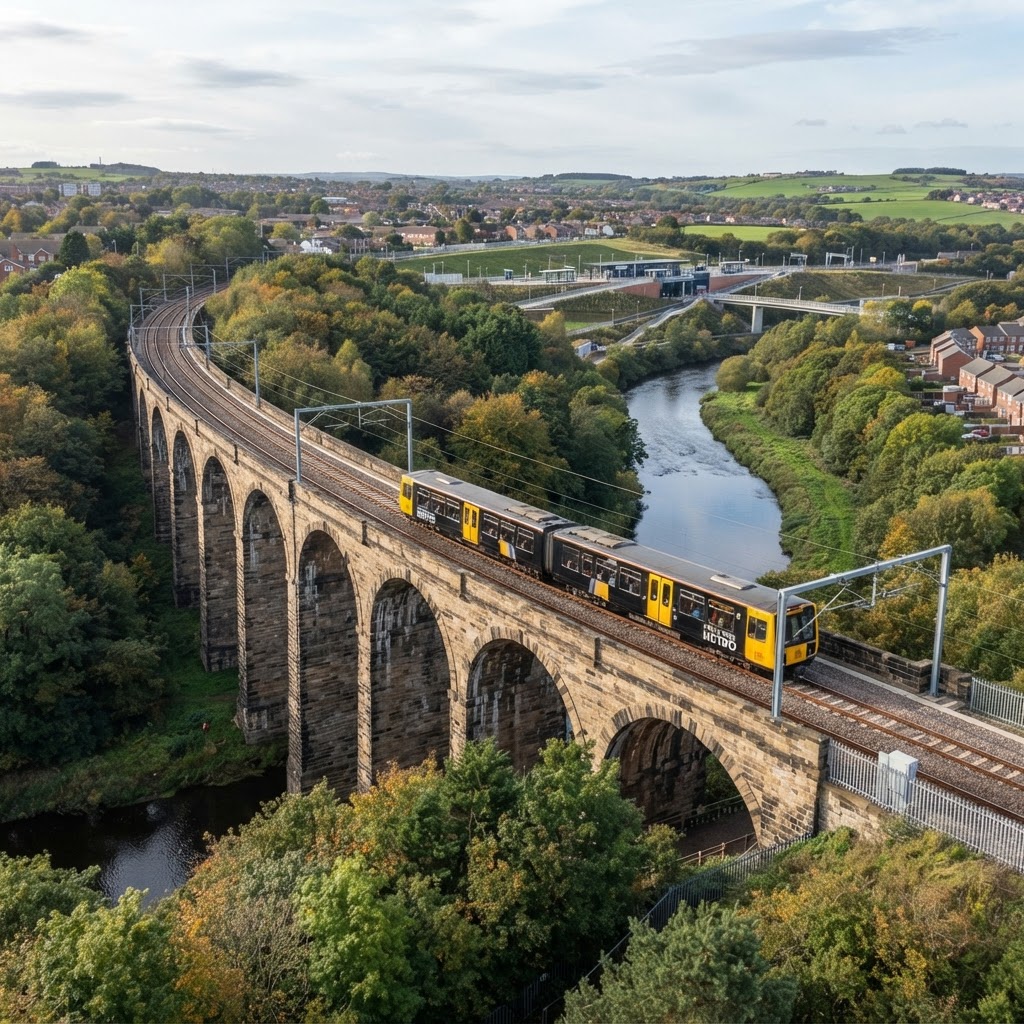
Table of Contents
- Project Overview: What Is Metro to Washington?
- The Proposed Route and Station Locations
- Funding and Investment Structure
- Reviving the Leamside Line
- Why Metro to Washington Matters
- Timeline and Public Engagement
- Engineering Challenges and Solutions
- Comparing UK Light Rail Extensions
- Conclusion
Project Overview: What Is Metro to Washington?
Metro to Washington is a 13km extension to the Tyne and Wear Metro system, the light rail network that has served Newcastle, Sunderland, Gateshead, and surrounding areas since 1980. The extension forms a key part of North East Mayor Kim McGuinness's vision to transform local transport and create an integrated network spanning the region. The project will link existing Metro stations at Pelaw and South Hylton via Washington, providing a new route between the cities of Sunderland and Newcastle through a town that has been without a railway connection for decades.
Washington, with a population of approximately 67,000, is one of the UK's largest towns without a rail station. The extension will change this, bringing light rail connectivity to a community that has relied entirely on buses and private cars for public transport. The project is particularly significant because it represents the first expansion of the Tyne and Wear Metro network in over 30 years, marking a major milestone in the region's transport history.
The proposals unveiled in September 2026 follow a feasibility study completed earlier in the year. The study evaluated potential station locations against a range of criteria including cost, impact on local residents, environmental considerations, and integration with existing infrastructure. The highest-scoring options have been taken forward for further development, with the public engagement sessions in September designed to gather feedback before the design is finalised.
The Proposed Route and Station Locations
The proposed route extends from Pelaw Junction, where a new track will be installed to allow trains from Washington to join the existing network. The existing footbridge to Stonehills Complex will need to be replaced, and bridleways and access roads will be altered to maintain existing connections. From Pelaw, the route proceeds to the first new station at Follingsby.
Follingsby station will be situated to the south of Follingsby Lane and will include ramp, lift, and stair access to both platforms. Follingsby is the preferred location for a Park and Ride car park, helping people access city centres by rail and reducing traffic on key roads. This station will serve the Follingsby Park business area, which includes major employers such as Amazon's warehouse, making it a crucial connection for employment-related travel.
Washington North station will be located at the intersection of the former Leamside Line and the A1290, providing access to the Sulgrave area of Washington and connections to the local bus network. To accommodate the station, the A1290 will be diverted south over the railway, connecting to Glover Road and Spire Road via the existing roundabout. This station is strategically positioned near the Nissan manufacturing plant and the International Advanced Manufacturing Park, serving one of the region's most important employment zones.
Washington South station is located to the south of the former Washington station, near the Fatfield, Columbia, and Teal Farm districts. Connectivity from east to west will be maintained through the introduction of an accessible footbridge. The route then crosses the River Wear via the historic Victoria Viaduct, which will be reused for a twin-track railway with overhead power masts installed in a sensitive manner consistent with similar historic viaduct projects elsewhere in the UK.
Funding and Investment Structure
The Metro to Washington project is backed by £1.85 billion in government investment, announced in June 2025 as part of a landmark funding deal for the North East. This funding was secured through the North East Mayoral Strategic Authority and represents one of the largest transport infrastructure investments in the region's history. The project is also expected to attract additional funding from the private sector, particularly around the station development areas.
The £1.85 billion package covers not just the Metro extension but also forms part of a wider £900 million project to expand the Tyne and Wear Metro network. This includes the introduction of a new Metro fleet, which has already been rolled out across the existing network, and a new signalling system that will improve service frequency and reliability. The combined investment represents a transformative step for public transport in the North East.
The funding structure reflects a broader shift in UK transport investment, with regional mayors securing direct investment for locally prioritised projects. This approach contrasts with the more centralised funding model that has historically favoured London and the South East. As the UK continues to invest in regional transport, projects like the TransPennine Route Upgrade and Northern Powerhouse Rail are receiving significant government backing to level up regional connectivity.
Reviving the Leamside Line
One of the most significant aspects of the Metro to Washington project is its use of the former Leamside Line railway alignment. The Leamside Line was a historically important railway route that connected the coalfields of County Durham to the River Tyne, but it has been disused for decades. The Metro to Washington extension will run along the northern section of this former railway, making practical use of an existing transport corridor rather than requiring entirely new land acquisition.
The North East Mayoral Strategic Authority is also developing a separate business case to reinstate the southern section of the Leamside Line for heavy rail trains. This means the Metro to Washington route provides an important foundation for a broader revival of the Leamside Line, which could eventually deliver both light rail passenger services and heavy rail freight capacity across the region.
The reuse of the Victoria Viaduct, a historic structure spanning the River Wear, is particularly noteworthy. The current proposal uses the viaduct for a twin-track railway, with overhead power masts installed in a sensitive manner that respects the structure's heritage. This approach has been successfully applied on similar historic viaducts elsewhere in the UK, demonstrating that modern transport infrastructure and heritage preservation can coexist. This project contrasts with but complements other UK rail developments, such as the HS2 high-speed rail project, which has faced its own challenges with heritage and environmental considerations.
Why Metro to Washington Matters
Metro to Washington is about far more than public transport — it is about economic regeneration, social equity, and environmental sustainability. The extension will unlock access to highly skilled jobs and opportunities, connecting a world-leading manufacturing zone and supporting economic growth across the region. By reducing travel times to work, education, and key locations, the project will transform the daily lives of thousands of residents.
For a town that has been without rail connectivity for decades, the impact cannot be overstated. Local residents have described the extension as ending decades of "false dawns" — promises of rail service that never materialised. The Washington community has been promised a Metro connection for over 40 years, and the September 2026 proposals represent the most concrete step yet towards delivering on that promise. The project will build a resilient and secure public transport solution that meets demand in Washington and the wider region, helping people feel safe and confident in their community.
The environmental benefits are equally significant. By taking more traffic off the region's roads, the project will cut carbon emissions and reduce air pollution. Access to local healthcare provision will be improved through better public transport connections. The extension also delivers clean, green, accessible, and modern integrated transport, aligning with the UK's net-zero commitments. For context, the modernisation of UK rail networks is happening across multiple fronts, and Metro to Washington represents a key piece of this national puzzle.
Timeline and Public Engagement
The project timeline targets an operational service by 2033, with significant milestones along the way. The feasibility study was completed in 2026, and the current public engagement phase in September 2026 involves 14 informal drop-in sessions across Washington and surrounding areas. These sessions give local people the opportunity to hear from project team members about progress, provide feedback, and ask questions.
The engagement process builds on earlier events held in summer 2025, which outlined the aims of the extension and gathered initial public input. Nexus has emphasised the importance of public feedback, noting that when the new Metro fleet was introduced, the organisation received approximately 23,000 comments and interactions on train design. The project team hopes for similar levels of engagement on station locations, route alignment, and integration with local bus services.
Following the September 2026 engagement, the proposals will be refined based on public feedback and further design development. The visualisations will evolve over time, and discussions with potentially impacted landowners have already begun as part of the land acquisition process. The project team has emphasised that no appointment is needed for the drop-in sessions, and attendees do not need to stay for the full duration — making it as easy as possible for local people to participate.
Engineering Challenges and Solutions
The Metro to Washington extension presents several significant engineering challenges, each with carefully considered solutions. At Pelaw Junction, new track must be installed to integrate with the existing network, requiring modifications to footbridges and bridleways. The A1290 road diversion at Washington North station is a major civil engineering undertaking, requiring the road to be realigned over the railway while maintaining connections to existing roads.
At South Hylton, the challenge of retaining permanent vehicle access to properties north of the railway has resulted in two shortlisted options. Option A would see a new road connecting Railway Terrace to St Luke's Road via a tunnel under the existing station site. Option B would upgrade the existing underpass at Keelman's Road, enabling vehicle access via Keelman's Lane and Claxheugh Road. Both options would close Hylton Bank to vehicles and move the station eastward to allow access to both platforms.
The southern alignment has been designed to avoid cutting through ancient woodland and the need for multiple large, intrusive new road bridges. The route runs on new track alignment to the south of Coxgreen Road towards South Hylton, minimising environmental impact while maintaining a popular local bridleway. At the A19 crossing, a new underpass will be designed to accommodate both the railway and bridleway users, maintaining public right of way access to nearby playing fields and Offerton Village.
Comparison: UK Light Rail Extensions in the 2020s
| Project | Length | Cost | Target Opening | New Stations |
|---|---|---|---|---|
| Metro to Washington | 13km | £1.85bn | 2033 | 3 |
| HS2 Phase One | 225km | £45bn+ | 2029-2033 | 4 |
| TransPennine Upgrade | 76km | £3bn | 2027-2030 | 0 (upgrade) |
| East West Rail | 200km | £5bn+ | 2025-2030 | Multiple |
| Edinburgh Trams (Newhaven) | 4.7km | £207m | 2023 (opened) | 8 |
Comparison: Metro to Washington — Key Facts at a Glance
| Feature | Details |
|---|---|
| Total length | 13km |
| New stations | 3 (Follingsby, Washington North, Washington South) |
| Connection points | Pelaw and South Hylton |
| Government funding | £1.85 billion |
| Target opening year | 2033 |
| First new Metro line in | 30+ years |
| Historic infrastructure reused | Leamside Line alignment, Victoria Viaduct |
| Public engagement sessions | 14 drop-in sessions in September 2026 |
Conclusion
The Tyne and Wear Metro to Washington extension represents a once-in-a-generation investment in Northeast England's transport infrastructure. For the 67,000 residents of Washington who have been without rail connectivity for decades, the September 2026 proposals mark the most concrete step yet towards ending years of false dawns. The £1.85 billion investment, three new stations, and creative reuse of the historic Leamside Line and Victoria Viaduct demonstrate how modern transport projects can respect heritage while delivering transformative economic and social benefits.
As the project progresses through public engagement and detailed design towards its 2033 target opening, it will serve as a model for how regional transport projects can level up connectivity, create jobs, and deliver sustainable travel options. For a region that has historically lagged behind in transport investment, Metro to Washington signals a new era — one where local priorities drive national infrastructure decisions.
You May Also Like: TransPennine Route Upgrade, Northern Powerhouse Rail in 2026, and HS2 High-Speed Rail Project.
Frequently Asked Questions
When will the Metro to Washington extension open?
The Metro to Washington extension is targeted to be operational by 2033. The feasibility study was completed in 2026, and public engagement sessions are being held in September 2026 to gather feedback on the latest proposals before the design is finalised.
How many new stations will the Washington Metro extension have?
The extension will include three new stations: Follingsby, Washington North, and Washington South. Follingsby will include a Park and Ride facility, Washington North will serve the Nissan plant area, and Washington South will serve the Fatfield and Teal Farm districts.
How much will the Metro to Washington project cost?
The project is backed by £1.85 billion in government funding, announced in June 2025 as part of a wider funding deal for the North East. Additional private sector funding is also expected, particularly around station development areas.
What is the route of the Metro to Washington extension?
The 13km extension connects existing stations at Pelaw and South Hylton via Washington. The route uses the former Leamside Line alignment, crosses the River Wear via the historic Victoria Viaduct, and passes under the A19 using a new underpass designed for both railway and bridleway users.
Why does Washington need a Metro extension?
Washington, with a population of approximately 67,000, is one of the UK's largest towns without a rail connection. The extension will provide access to jobs, education, and healthcare while reducing road traffic, cutting carbon emissions, and connecting the town to Newcastle and Sunderland city centres.
How can local residents give feedback on the proposals?
Nexus is holding 14 informal public drop-in sessions across Washington and surrounding areas throughout September 2026. No appointment is needed, and attendees do not need to stay for the full session. Feedback can also be provided through the Nexus website.
What historic infrastructure is being reused for the extension?
The extension reuses the northern section of the former Leamside Line railway alignment and the historic Victoria Viaduct over the River Wear. The viaduct will carry a twin-track railway with overhead power masts installed sensitively to respect the structure's heritage.