Europe's railway landscape is undergoing its most dramatic transformation in decades, with the European Union accelerating development of a continent-wide high-speed rail network, launching the "One Journey, One Ticket" initiative to simplify cross-border travel, and welcoming dozens of new direct connections in 2026. From the new Milan-Munich direct train line that began service this year to expanded night train networks connecting Scandinavia with southern Europe, travellers can now reach more destinations by rail than at any point since the golden age of steam. The changes come as Deutsche Bahn pushes its punctuality targets, France and Spain extend their high-speed networks, and low-cost carriers enter the market — developments that echo the infrastructure funding debates reshaping American rail in 2026.
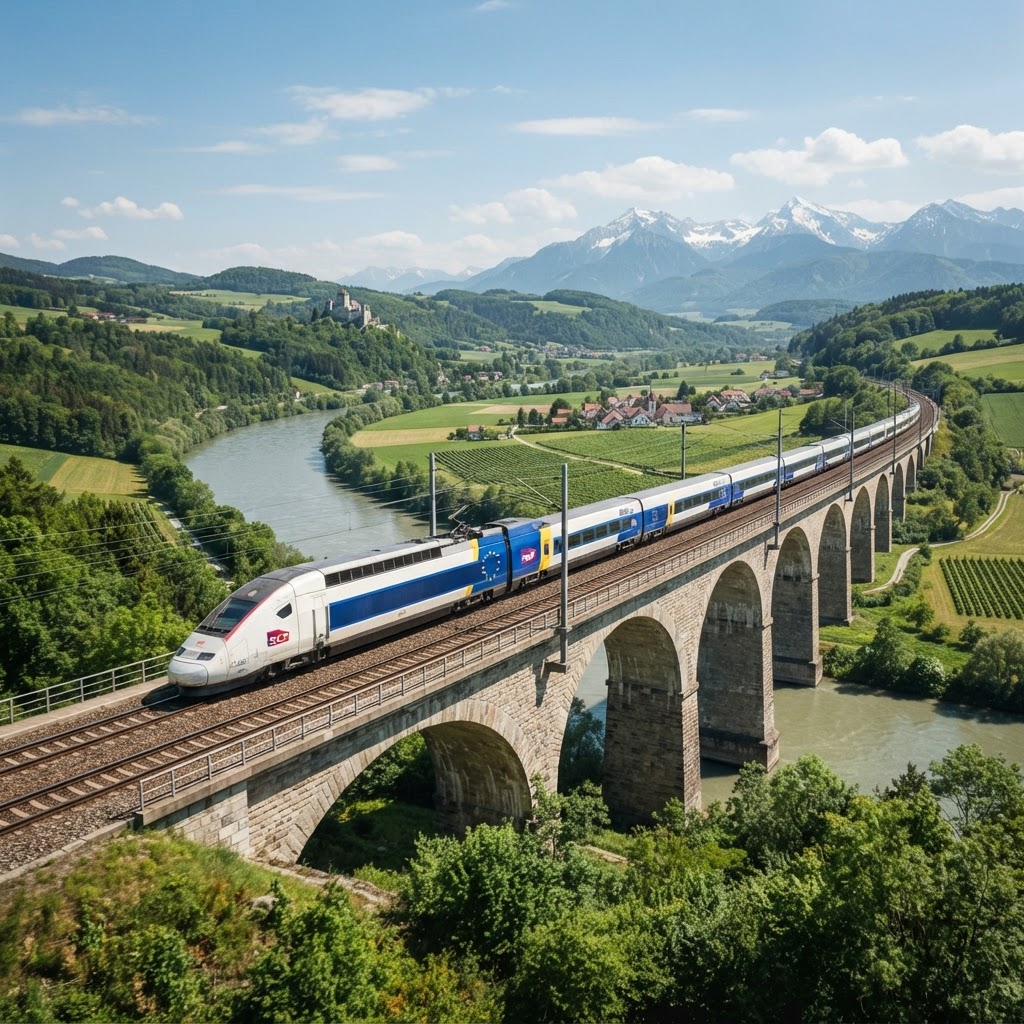
Table of Contents
- One Journey, One Ticket: Cross-Border Simplification
- New Train Lines and Direct Connections in 2026
- The Night Train Renaissance
- EU High-Speed Network Acceleration
- Punctuality Pressures: Deutsche Bahn's Challenge
- Low-Cost Carriers Transform the Market
- Europe's High-Speed Networks Compared
- Conclusion
One Journey, One Ticket: Cross-Border Simplification
The European Union has unveiled its "One Journey, One Ticket" initiative, a landmark programme designed to remove one of the biggest barriers to cross-border train travel: the need to book separate tickets with different operators for a single journey. Under the initiative, passengers will be able to purchase a single through-ticket covering multiple railway operators across national borders, with unified compensation rights when things go wrong and a single point of contact for customer service.
For decades, a trip from Brussels to Milan might involve booking with three separate operators, each with its own fare rules, reservation systems, and disruption policies. The initiative builds on earlier EU efforts including the Single European Railway Area and the TEN-T network development. The move has been welcomed by consumer groups and rail operators alike, as it makes rail travel genuinely competitive with short-haul flights for the first time on many cross-border routes. The approach mirrors what India has achieved domestically — a unified ticketing system across its vast network — and demonstrates how digital ticketing technology is transforming transport worldwide.
The initiative forms part of the broader Connecting Europe Days programme, where EU policymakers gathered to discuss the rail freight of the future — an integrated, automated and digitalised logistics ecosystem designed to shift more freight from road to rail across the continent.
New Train Lines and Direct Connections in 2026
The year 2026 marks one of the busiest periods for new route launches in recent European history. Among the most significant is the direct Milan-Munich train line, which finally connects two of Europe's great economic centres without requiring a change. The route offers a fast, comfortable alternative to flying, serving both business travellers and tourists exploring the Alps region. The service represents growing cooperation between Italy's Trenitalia and Germany's Deutsche Bahn.
Elsewhere, new cross-border connections are linking previously underserved city pairs. Increased service to Italy and Scandinavia features prominently in the 2026 schedule, while construction works in northern Sweden are being managed to minimise disruption to existing routes. Travellers should note that a service interruption between Paris and Milan runs from 14 September to 13 October 2026 for infrastructure works — a reminder that Europe's rail boom requires significant engineering investment, much like the £3 billion TransPennine Route Upgrade transforming northern England.
For travellers planning multi-country journeys, these new connections mean fewer forced overnight stops and more same-day travel options. The expansion parallels efforts elsewhere — India's approval of 900 km of new railway lines shows how governments globally are betting on rail to meet connectivity and climate goals simultaneously.
The Night Train Renaissance
Long-distance night trains are experiencing a renaissance across Europe, with new routes and upgraded rolling stock replacing the services that dwindled in the era of budget airlines. Night trains now connect major city pairs that are too far apart for convenient day travel, allowing passengers to sleep through the journey and arrive rested in city centres. Operators like ÖBB (Austria) with its Nightjet network, Snälltåget, and European Sleeper have expanded their route maps significantly for 2026.
The night train revival is driven by a combination of factors: growing environmental awareness among travellers, the hassle of airport security, and the romantic appeal of waking up in a new country. New sleeper carriages offer private compartments with en-suite facilities in some cases, bringing the experience closer to hotel-on-wheels standards. Travellers accustomed to overnight train classes like Indian Railways' AC sleeper coaches will find the European equivalents familiar, if pricier.
For budget travellers, night trains also save a night's accommodation cost. Combined with the Eurail pass system — covered in our companion guide to how ticket types work on other rail systems like Amtrak — the night network makes multi-country European tours genuinely affordable without flying.
EU High-Speed Network Acceleration
The EU is accelerating development of its high-speed train network under the Trans-European Transport Network (TEN-T) policy, which aims to connect European regions with modern, fast rail links. The programme includes funding for new high-speed lines, upgrades to existing corridors, and the elimination of bottlenecks at border crossings where different national signalling systems have historically forced trains to slow or stop.
Key corridors under development include the Scandinavian-Mediterranean corridor linking Finland and Sweden to Italy and Malta, and the Atlantic corridor connecting Portugal and Spain through France towards Germany. The ambition is that by the 2030s, a traveller could ride high-speed trains from Lisbon to Helsinki with minimal changes. The EU's approach contrasts with the UK's more contested model — HS2 remains Europe's most controversial high-speed project — and with India's ambitious programme of seven new bullet train corridors under development.
Safety technology is also advancing across the European network. The European Train Control System (ETCS) is being rolled out progressively to replace national systems, enabling seamless cross-border operation. Such signalling modernisation has parallels worldwide — India's Kavach anti-collision system represents a similar leap in rail safety technology.
Punctuality Pressures: Deutsche Bahn's Challenge
While the network expands, punctuality remains a challenge for some operators. Deutsche Bahn, Germany's national carrier, has adjusted its punctuality target — now aiming for 70 percent of long-distance trains to be on time by 2029, pushing back the previous 2026 deadline. The German government has accepted that fixing the network's reliability requires sustained investment in infrastructure renewal, which will cause short-term disruption for long-term gain.
The situation in Germany illustrates a wider truth about rail investment: expansion and maintenance must go hand in hand. Countries that prioritise both — like Switzerland, famous for its clockwork reliability — consistently top European passenger satisfaction surveys. Elsewhere, operators are investing in modernisation programmes similar to the track renewal efforts underway on Indian Railways, recognising that reliability is as important as speed for winning passengers.
Low-Cost Carriers Transform the Market
The arrival of new low-cost carriers in 2026 is democratising European rail travel. Operators like Trenitalia's competing services, Ouigo in France and Spain, and new entrants on cross-border routes are applying airline-style pricing to trains — offering rock-bottom advance fares in exchange for flexible restrictions. The competition is forcing incumbent operators to improve value and has made rail travel accessible to students and budget travellers who previously defaulted to budget flights.
The competitive pressure extends to onboard services, with operators differentiating on WiFi quality, catering, and luggage policies. Connectivity is a battleground — much as Project Reach is transforming mobile coverage on UK trains, continental operators are racing to offer seamless onboard internet across borders.
Environmental policy is also shaping the market. Several countries have introduced or increased taxes on short-haul flights where viable rail alternatives exist, and France's ban on domestic flights coverable by train in under 2.5 hours has shifted significant traffic to rail. Freight is following passengers, with dedicated freight corridors reshaping logistics in India serving as a model for European freight integration plans.
Europe's High-Speed Networks Compared
| Network | Top Speed | Route km (approx) | Signature Routes |
|---|---|---|---|
| TGV (France) | 320 km/h | 2,800 km | Paris-Lyon, Paris-Marseille |
| ICE (Germany) | 300 km/h | 2,400 km | Frankfurt-Cologne, Berlin-Munich |
| AVE (Spain) | 310 km/h | 3,000+ km | Madrid-Barcelona, Madrid-Seville |
| Frecciarossa (Italy) | 300 km/h | 1,500 km | Milan-Rome, Turin-Salerno |
| Eurostar | 300 km/h | London-Paris/Brussels/Amsterdam | Channel Tunnel routes |
2026 Route Launches at a Glance
| New Connection | Region | Type | Status |
|---|---|---|---|
| Milan-Munich direct | Italy-Germany | Day high-speed | Launched 2026 |
| Expanded Nightjet routes | Central Europe | Night sleeper | Expanding 2026 |
| New low-cost cross-border | Multiple | Low-cost day | Entering service |
| Scandinavia-Italy links | Nordic-Mediterranean | Long-distance | Under development |
| Paris-Milan works | France-Italy | Interruption | 14 Sep-13 Oct 2026 |
Conclusion
Europe's railway renaissance in 2026 is more than a collection of route launches — it is a fundamental reshaping of how the continent moves. The One Journey, One Ticket initiative removes historical friction from cross-border travel, new connections like Milan-Munich make city pairs closer than ever, and night trains plus low-cost carriers widen access to every travel style and budget. With the EU accelerating its high-speed network and sustainability policies pushing travellers toward rail, the question for 2027 and beyond is not whether European rail will grow, but how quickly. For travellers worldwide — whether comparing options like Amtrak's ticket classes in the US or India's vast network — Europe offers a preview of what a truly integrated, continent-wide rail system looks like.
You May Also Like: HS2 High-Speed Rail Project, Northern Powerhouse Rail, India's 7 New Bullet Train Corridors, US Surface Transportation Reauthorization, TransPennine Route Upgrade.
Frequently Asked Questions
What is the EU One Journey One Ticket initiative?
It is an EU programme that lets passengers buy a single through-ticket for journeys involving multiple railway operators across national borders, with unified compensation rights and one point of contact for customer service. It removes the need to book separately with each operator for one trip.
Is there now a direct train between Milan and Munich?
Yes, a direct Milan-Munich train line launched in 2026, connecting the two cities without requiring a change. The service is a cooperation between Trenitalia and Deutsche Bahn and offers a fast, comfortable alternative to flying.
Are night trains making a comeback in Europe?
Yes. Operators like ÖBB Nightjet, Snälltåget, and European Sleeper have significantly expanded their night routes for 2026, with new sleeper carriages offering private compartments. Night trains save both a hotel night and travel time on routes too long for day trips.
Which Paris-Milan services are affected by 2026 engineering works?
Service between Paris and Milan is interrupted from 14 September to 13 October 2026 for infrastructure works. Travellers should check operator sites for replacement options or reroute via Lyon or Switzerland during this period.
How is the EU expanding its high-speed rail network?
Under the TEN-T policy, the EU is funding new high-speed lines and upgrading corridors like the Scandinavian-Mediterranean and Atlantic corridors, while rolling out the ETCS signalling system to enable seamless cross-border high-speed operation.
Why did Deutsche Bahn change its punctuality target?
Deutsche Bahn now aims for 70 percent of long-distance trains on time by 2029 instead of 2026, acknowledging that network renewal takes longer than planned. Sustained infrastructure investment is required to improve reliability across the German network.
Are low-cost train operators really cheaper than budget flights?
Often yes, especially when booked in advance. Operators like Ouigo apply airline-style dynamic pricing with fares that can undercut budget flights, and with no baggage fees, city-centre stations, and no security queues, the total cost and time can favour rail.